
INTERNATIONAL INVESTMENT
AND PORTAL
How do you assess the current global foreign investment landscape amid volatility and intensifying geoeconomic competition?
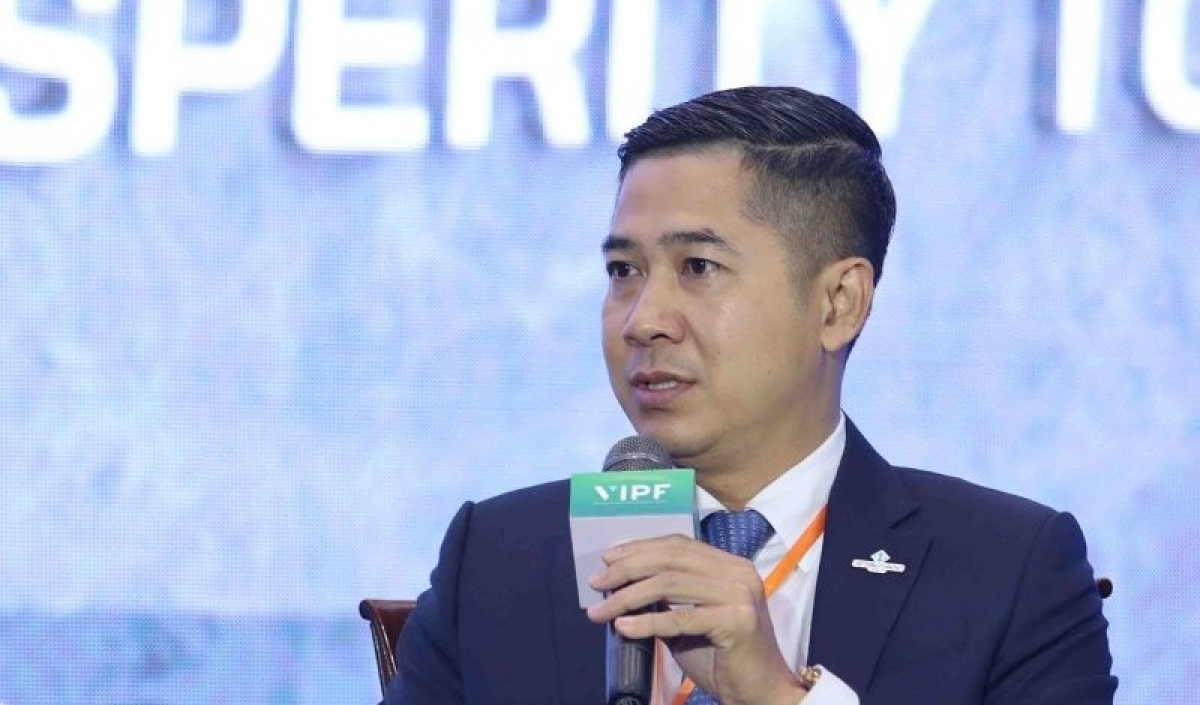
 Mickael Driol, CEO of Mekong Partners
Global investment is being reshaped by strategic priorities rather than cyclical patterns. Capital now moves through geopolitical filters, with investors scrutinising jurisdictions through the lens of long-term security, supply chain continuity, and regulatory direction. This marks a shift towards decisions designed to withstand political and technological fragmentation.
What stands out today is a move from efficiency-based planning to resilience-based deployment. Firms are seeking jurisdictions that can sustain operations under stress, coordinate industrial policy, and provide reliable governance. In my advisory work with institutional investors, we increasingly evaluate markets by scenario modelling tied to geopolitical and tech bifurcation, something that barely registered a decade ago.
Foreign investment composition is also shifting. High-value sectors drive new commitments, while traditional low-margin assembly is losing strategic relevance. These shifts unfold in an environment shaped by high rates, moderate growth, and conservative investment committees.
Where does Vietnam currently stand on the regional and global investment map, and what factors are strengthening Vietnam’s attractiveness to international investors?
Vietnam has become an indispensable part of many Indo-Pacific investment plans. Instead of being treated as a peripheral production site, it functions as a structural component of regional supply chains. This shift reflects a combination of policy stability, progressive integration into global trade frameworks, and a regulatory environment that investors view as consistently directional.
The country’s industrial maturity is rising quickly. Electronics, mobility technologies, industrial components, and renewable-energy equipment now operate within interconnected networks that allow manufacturers to scale operations efficiently. This level of clustering is central to Vietnam’s appeal for firms that need depth, not just labour cost advantages.
On the workforce front, adaptability is a factor frequently cited by foreign executives. Vietnamese engineering teams integrate new production standards, digital workflows, and automation at a pace that shortens setup time for complex projects.
Which sectors in Vietnam are emerging as the most appealing destinations for foreign financiers in the coming period?
Investor momentum is moving towards industries with long-term structural demand. Electronics and semiconductor-adjacent activities continue to anchor inflows, especially as firms look for reliable locations to scale testing, packaging, and precision components.
Electric mobility is also drawing increased interest. Battery technologies, electric vehicle components, and supporting software systems form part of a broader regional realignment of the mobility supply chain, and Vietnam is well positioned within that architecture.
Renewable-energy-linked manufacturing is gaining traction. Equipment for solar, wind, storage, and grid modernisation attracts capital from both industrial firms and financial institutions seeking stable assets.
Digital infrastructure is advancing rapidly as well. Data centres, cloud technologies, industrial software, and cybersecurity solutions benefit from Vietnam’s accelerating digital transformation and rising enterprise demand.
In the context of supply chain realignment and the increasing requirements for greener production, what competitive advantages does Vietnam hold?
Vietnam sits at an advantageous intersection of geography, industrial capacity, and policy direction. The energy transition is another element shaping investor confidence. Strong renewable potential, clearer planning frameworks, and ongoing liquefied natural gas development give manufacturers greater certainty about building operations aligned with global climate commitments.
One of Vietnam’s strengths is its workforce’s ability to internalise new production standards and digital tools quickly. This capability shortens deployment cycles for companies that must meet strict sustainability and traceability requirements.
What opportunities are opening up for Vietnam as many global corporations seek to diversify away from traditional markets?
As companies diversify operational risk, they are creating distributed production systems rather than relocating en masse. Vietnam fits into this as a counterpart to China.
A second opportunity comes from staged investment models. Many firms begin with limited operations and expand after confirming regulatory fit, talent availability, and supply chain integration. This approach generates long-term commitments.
There is also strong momentum in industries shaped by decarbonisation and digitalisation, from advanced energy equipment to industrial electronics and data-driven operations.