
INTERNATIONAL INVESTMENT
AND PORTAL
The Ministry of Finance has proposed halving environmental protection tax on petrol and diesel to ease cost pressures amid volatile global oil prices.
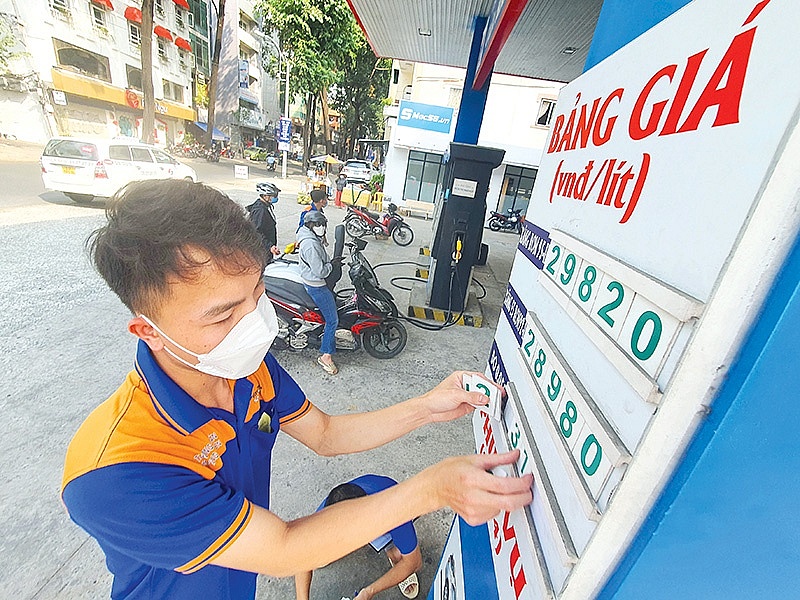
The proposal, outlined in a draft resolution of the National Assembly Standing Committee now open for public consultation, would reduce tax on petrol (excluding ethanol) to VND1,000 (4 cents) per litre and on diesel to VND500 (2 cents) per litre. Jet fuel tax would also be reduced by VND500 to VND1,000 per litre.
If approved, the revised tax rates would take effect from the date of issuance through June 30, with a possible extension subject to further recommendations from the Ministry of Industry and Trade (MoIT) and government approval.
As an indirect tax embedded in retail prices, a reduction in the environmental protection tax is expected to lower fuel prices accordingly. For example, a 4 cents cut in petrol tax could reduce retail prices by around VND1,080 (4.3 cents) per litre, including VAT. Similarly, a 2 cents reduction for diesel and jet fuel may lower prices by approximately VND540 (2.1 cents) per litre.
The proposal follows recommendations from the MoIT, which described the current context as 'urgent' due to sharp fluctuations in global oil prices driven by geopolitical tensions in the Middle East. At present, the environmental protection tax accounts for about 6.7 per cent of the base fuel price.
Under current regulations, reducing the tax within the existing framework falls under the authority of the National Assembly Standing Committee, while a reduction to zero would require full National Assembly approval.
According to estimates by the Statistics Office under the Ministry of Finance (MoF), the tax cut would help curb inflation by lowering consumption price index compared to maintaining current tax levels.
However, the MoF also projects a monthly revenue shortfall of around VND1.79 trillion ($71 million), including VAT losses. This is viewed as a form of fiscal support to households and businesses, helping to sustain production and economic activity.
To mitigate the impact on the state budget, the government has directed relevant agencies to strengthen revenue collection, prevent tax evasion and transfer pricing, and review non-essential expenditures at both central and local levels. In addition, higher global crude oil prices could partly offset revenue losses through increased oil-related budget revenues.
The draft Resolution is being developed under expedited procedures and is expected to take effect immediately upon approval.
Currently, retail prices stand at around VND30,690 ($1.20) per litre for RON 95-III petrol and VND33,420 ($1.30) per litre for diesel, up 52 per cent and 73 per cent, respectively, compared to late February, before the escalation of tensions in the Middle East.
 Fuel import tariffs temporarily cut to zero until April 30
The government has temporarily cut preferential import tariffs on several petroleum products to zero, aiming to help businesses secure supply and stabilise the domestic fuel market amid global energy disruptions caused by Middle East tensions.
 Middle East tensions raise energy, logistics and FX risks for Vietnam corporates
Escalating conflict in the Middle East is raising concerns about credit risks for Vietnamese businesses as energy and transport costs climb and global financial volatility intensifies.
 Vietnam Airlines to suspend domestic routes as fuel costs rise
Vietnam Airlines is planning to suspend several domestic routes from April 1 amid tightening Jet A-1 fuel supply and surging prices linked to Middle East tensions.
By Nguyen Huong