
INTERNATIONAL INVESTMENT
AND PORTAL
Vietnam is increasingly being chosen by international companies seeking to expand production and diversify their supply chains. However, for a foreign-invested enterprise, finding suitable industrial land or a ready-built factory is only the first step.
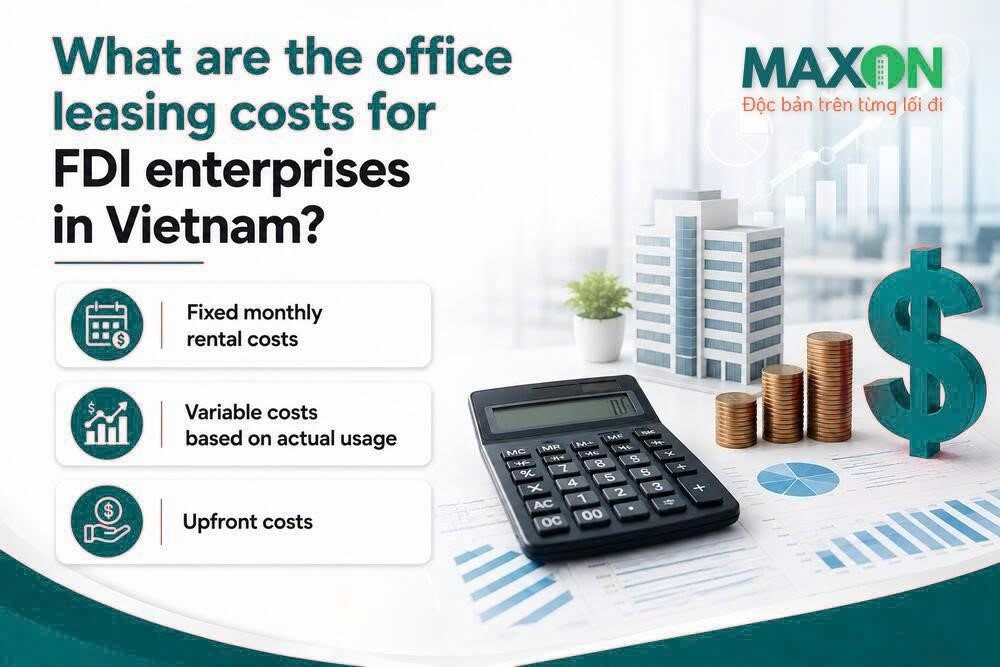
Investors must also consider investment procedures, permitted industries, technical infrastructure, human resources, logistics, operating costs, implementation timelines and expansion potential.
The continued inflow of manufacturing investment is generating growing demand for industrial land, ready-built factories, warehouses and logistics properties across Vietnam. Industrial real estate, however, cannot be selected solely based on size, location and rental price.
Each manufacturing project has its own requirements regarding permitted industries, technical infrastructure, environmental conditions, workforce availability, supply chain connectivity and the timeline for bringing the factory into operation.
Therefore, what a foreign-invested enterprise (FIE) needs is not simply a list of properties available for sale or lease. Investors require a single point of contact capable of understanding their requirements, screening information, connecting them with the right partners and supporting the site-selection process in Vietnam.
A location aligned with the industry and supply chain
Before searching for a property, an investor should clearly define its production processes, proposed investment scale, expected capacity, land or factory requirements, infrastructure needs, workforce demand and logistics arrangements.
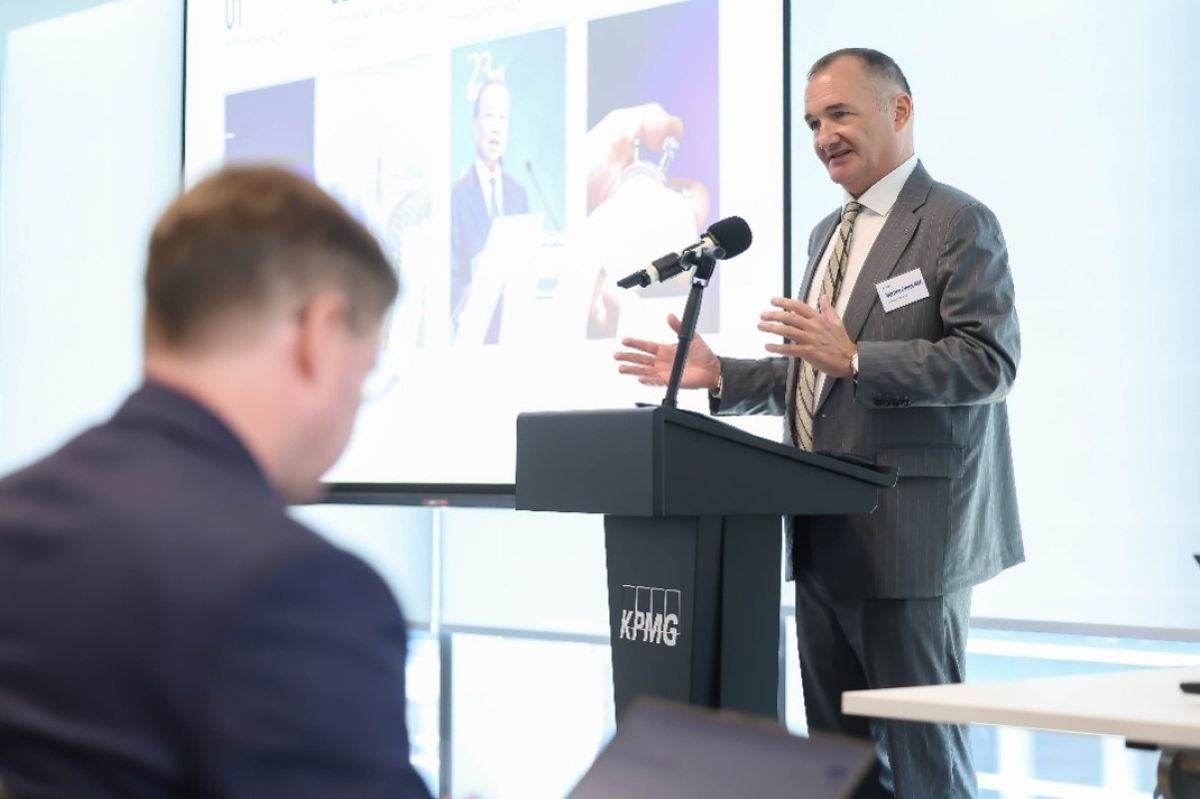
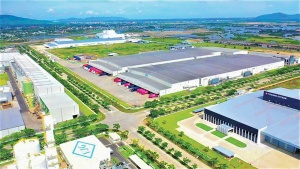
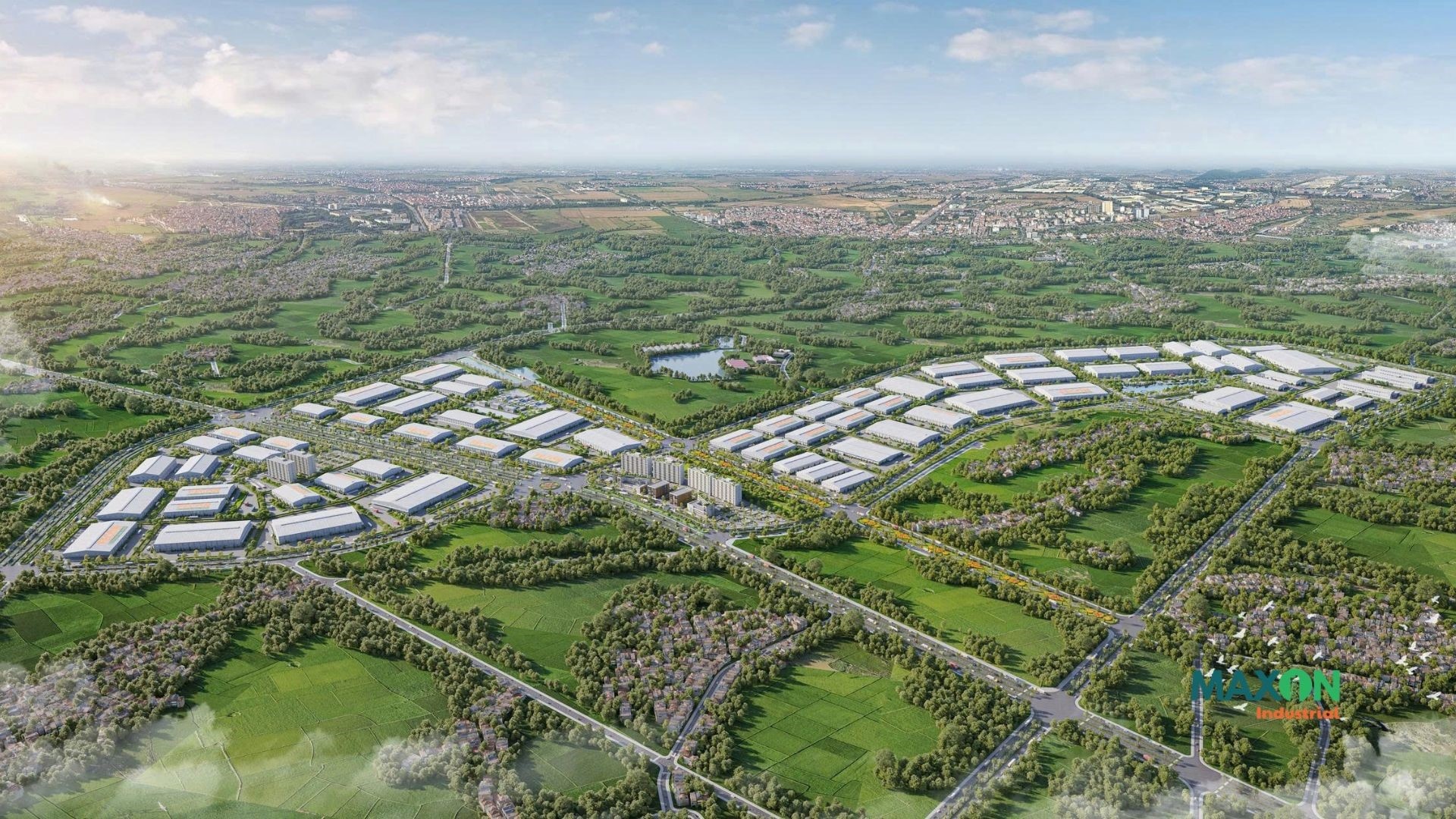 Clear site-selection criteria can streamline the process for investors. Image courtesy of Maxon
The project commencement schedule, locations of suppliers and customers, target markets and future expansion plans should also be clarified at the outset.
Translating these requirements into a clear set of site-selection criteria enables firms to reduce unnecessary surveys, eliminate unsuitable options and identify locations that can support their long-term production strategies.
In addition, for foreign-invested enterprises, legal compliance and project feasibility are often just as important as the rental price. Investors need clear information concerning planning status, land-use purposes, remaining land-use terms, permitted industries, infrastructure conditions and the contractual arrangements offered by infrastructure developers.
Beyond selecting the property, firms may also need to complete procedures relating to investment registration, corporate establishment, land, construction, environmental compliance and fire prevention and firefighting, depending on the scale and nature of the project.
An investment promotion unit does not replace a law firm, specialist legal adviser or government authority.
However, a market-oriented point of contact can help enterprises identify the matters that need to be examined, prepare an initial information checklist and connect with the appropriate professional advisers when specialist support is required.
For international investors, transparent, consistent and verifiable information is fundamental to building trust before entering the site-survey and negotiation stages.
An attractive factory or a land plot located near a major transport route may not necessarily meet an enterprise’s operating requirements.
Investors need to examine the available electrical capacity and supply stability, water supply and drainage systems, wastewater treatment capacity, telecommunications infrastructure, internal road systems and transport load capacity.
Fire prevention and firefighting conditions, ground elevation, drainage capability and the feasibility of installing machinery, production lines and specialist equipment should also be assessed during the site-selection stage.
Technical details that are overlooked at the beginning may lead to substantial additional costs, project delays or changes to the production plan once implementation has already commenced.
Workforce availability and long-term production capacity
Many enterprises focus heavily on land prices or rental rates without fully evaluating workforce conditions. A location with lower property costs may still generate significantly higher operating expenses if recruitment is difficult, employee turnover is high or skilled technical labour is limited.
Foreign-invested enterprises should assess the population within a practical recruitment radius, competition for workers among nearby factories, prevailing income levels, the availability of skilled employees and commuting distances between residential areas and the factory. Worker accommodation, healthcare, education, transport and other essential local services can also affect the ability to attract and retain employees.
Workforce availability not only influences the initial recruitment process but also affects the enterprise’s ability to maintain production capacity and expand operations in the future.
Electricity, water, environmental treatment, labour, factory modification, construction and future expansion costs should also be included in the comparison. Rather than choosing the option with the lowest rental price, investors should evaluate the total investment and operating costs over the full life of the project.
The time required to bring a factory into operation can directly affect production plans, delivery schedules and the enterprise’s ability to fulfil commercial contracts.
For large-scale projects requiring customised factory designs and long-term operations, leasing industrial land and constructing a purpose-built factory may provide greater control.
A capable investment support partner should help the enterprise compare the advantages, limitations, implementation timelines and costs of each option, rather than simply promoting the type of property currently available.
For international enterprises, challenges may arise not only from investment procedures but also from differences in language, communication practices and coordination among multiple parties.
Information concerning pricing, timelines, legal matters, infrastructure and transaction terms should be presented clearly, consistently and in a verifiable manner.
Foreign-invested enterprises therefore need a point of contact capable of receiving enquiries in an appropriate language, translating business requirements into specific site-selection criteria, consolidating comparable options and coordinating with infrastructure developers in Vietnam.
Maxon Industrial: Supporting investors from requirements to location selection
MAXON Industrial is an industrial real estate business development and investment promotion unit within the MAXON Corporation ecosystem. MAXON Corporation was recognised among the ‘Top 10 Leading Real Estate Brands in Vietnam 2026’.
Instead of beginning with a list of available land plots or factories, MAXON Industrial starts with the enterprise’s investment requirements. Its support process is structured around the following stages:
Requirement identification – Industry analysis – Criteria development – Market screening – Option proposal – Site survey – Infrastructure developer connection – Site-selection support.
MAXON Industrial focuses on connecting enterprises with suitable industrial land, ready-built factories, warehouses and manufacturing locations.
When specialist requirements arise, the company can connect clients with partners in legal services, logistics, recruitment, energy, environmental consultancy and industrial services.
MAXON Industrial does not make investment decisions on behalf of clients. Its role is to help enterprises access structured information, work with appropriate parties and gain a stronger basis for make more informed comparisons.
Contact information:
MAXON Industrial
Head office: 3rd Floor, Zone A, V CENTER, 103 Van Phuc, Ha Dong, Hanoi, Vietnam.
Thai Nguyen branch: MAXON Building, 298A Truong Chinh, Van Xuan, Thai Nguyen, Vietnam.
Email: info@maxon.vn
Websites: maxon.vn
Hotline:
Head office: 0915 04 36 36
Thai Nguyen branch: 093 379 3228
 Semiconductor industry hoped to attract half of FDI investors in Da Nang
Some potential investors are exploring investment chances in central Da Nang city, and its Hi-Tech Park and Industrial Zones Authority (DHPIZA) hopes that 50 per cent of those FDI businesses will invest in the local semiconductor industry this year.
 Industrial realty poised to grasp FDI
Vietnam’s industrial real estate market is entering its next phase of growth, driven by high-quality investment inflows and the transition towards greener development.
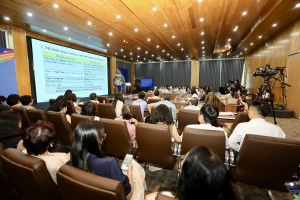 Vietnam urged to upgrade FDI quality as global production chains restructure
Global production networks are undergoing profound restructuring under the combined impact of tariff policies, AI, and growing concerns over supply chain security. As competition among major economies shifts from low-cost manufacturing to technological capability, Vietnam needs to improve the quality of foreign direct investment, strengthen its industrial ecosystem, and develop domestic enterprises to move up global value chains.
 Vietnam's registered FDI jumps 58 per cent in first seven months
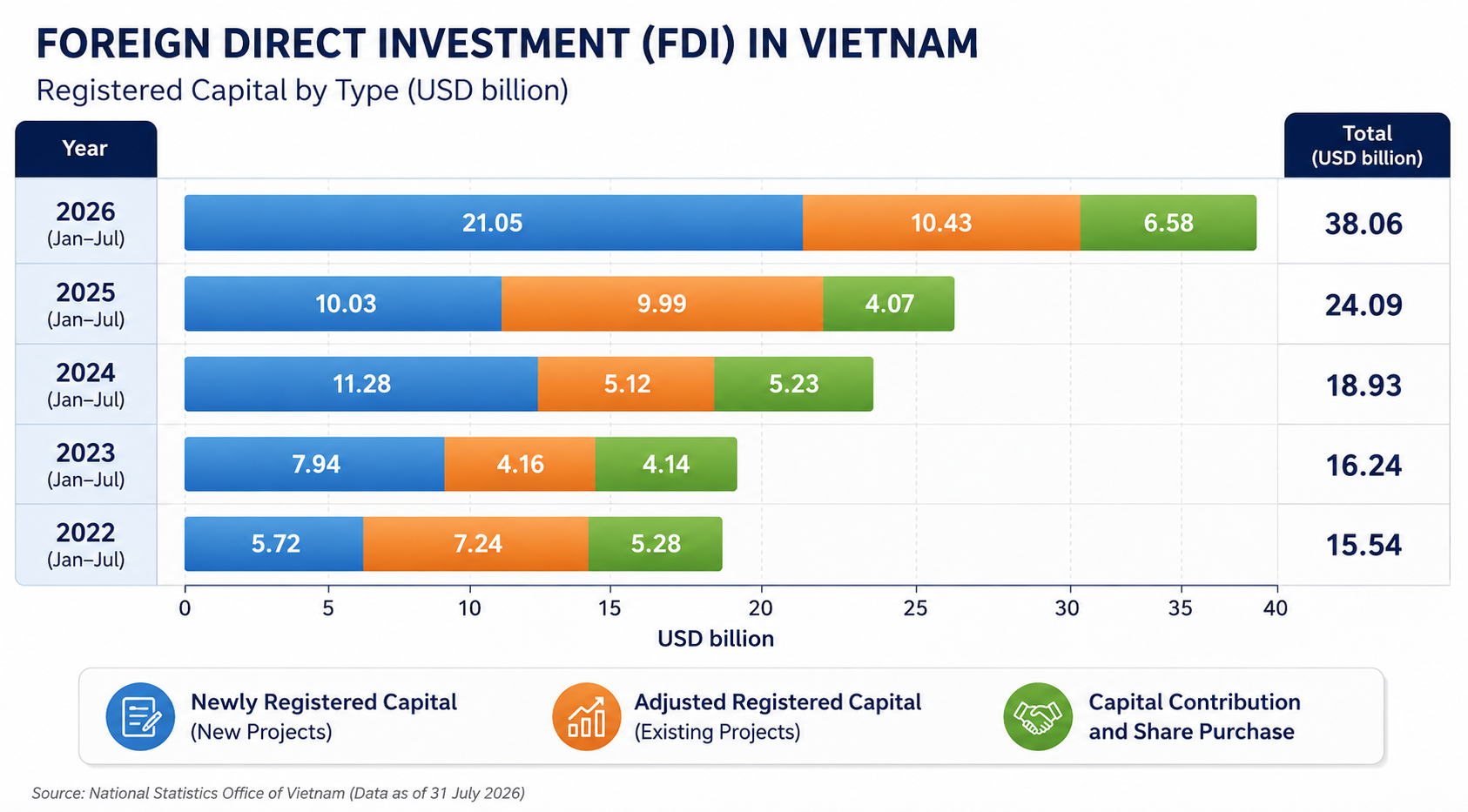
Vietnam attracted $38.06 billion in registered foreign direct investment during the first seven months of 2026, up 58 per cent on-year, according to the National Statistics Office on August 3.